Energy access / Kenya
The price of light
What a tin lantern can tell us about the cost of an evening in rural Kenya.
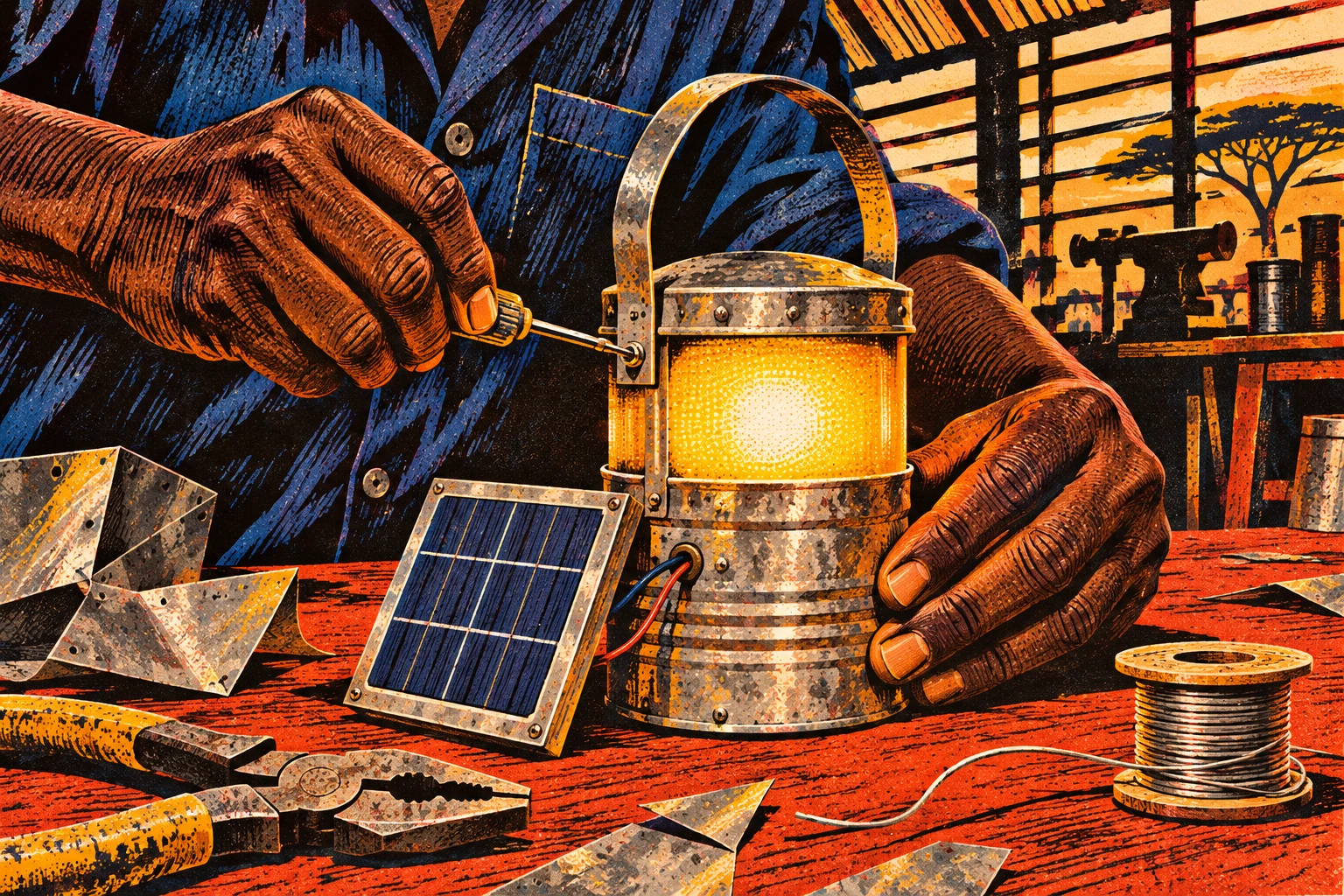
One lamp, two ledgers
For a family buying kerosene a little at a time, the price of light arrives in small instalments. A solar lamp reverses that arrangement. Most of its cost arrives on the first day. The difference only becomes visible over the evenings that follow.
The African Capacity Building Foundation’s study of Kenyan inventor Evans Wadongo describes the Mwangabora, a portable LED lantern assembled with scrap metal and pieces of solar panel. The paper connects its design to an everyday problem. Several people wanted to read or work by the light of a single, weak kerosene flame.
Where the saving goes
In the case study, the project linked fuel savings to small enterprises. Reconstructing that claim calls for two records. The first is a fuel diary kept by the person who makes the purchases. The second is a record of what the household did with the money. A week with lower fuel spending can help pay for food, a repair or a business expense. Each is a different outcome.
Start the diary with the last seven evenings. Record which lamp was used in each room, when the battery ran down and whether someone bought kerosene anyway. Repeat the exercise after a cloudy week. This produces a much more useful estimate of recurring cost than assuming the old lamp disappeared on delivery day.
Try the household ledger
Enter a purchase price and two weekly lighting costs to see when the savings cover the lantern.
What the case can establish
The source reports changes in school dropout rates in communities using the lamps. School records, comparison communities and the dates of other education programmes would help test how much of the change was attributable to lighting. A student gaining a reliable hour to read is already a concrete outcome worth recording in its own right.
Read AfCoP case study 59 (PDF) · Find the publication record